Daily Guidance
Clear summaries for what matters today: rain, wind, comfort, air quality, and timing.
AERI turns complex weather information into clearer daily guidance, severe-weather context, map awareness, and calm communication for people who need to know what to do next.
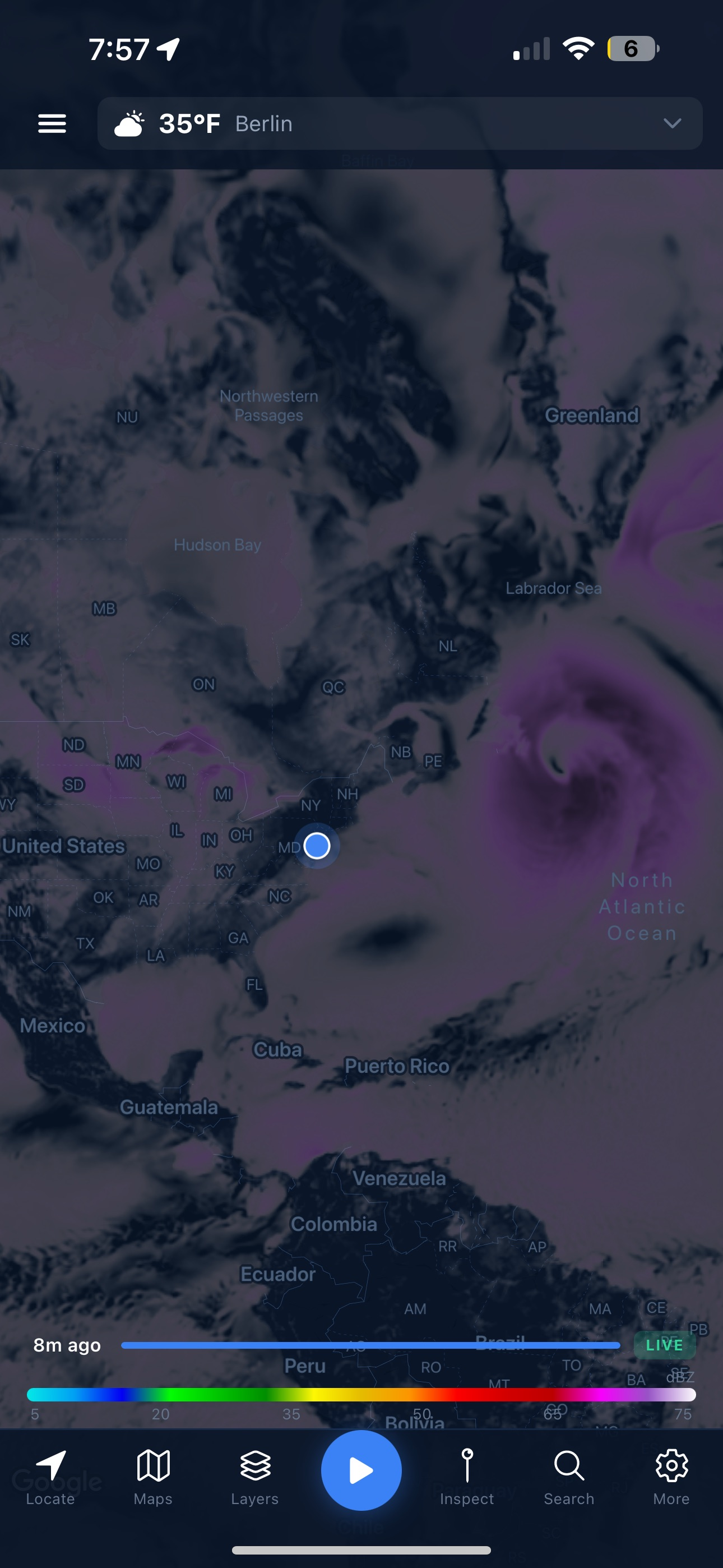
The current product direction focuses on weather guidance that can be scanned quickly: forecast context, severe-weather modes, radar awareness, and calmer safety communication in one mobile-first experience.
The goal is simple: reduce weather confusion before it becomes decision stress. AERI combines forecast interpretation, risk language, radar context, and safety pathways into one calmer experience.
Clear summaries for what matters today: rain, wind, comfort, air quality, and timing.
Risk information shaped for quick understanding, not panic or overloaded dashboards.
Interfaces built around attention, trust, and what people can actually process under stress.
A forecast is only useful if someone can understand what matters, when it matters, and what action makes sense. AERI is designed for the moment between seeing weather information and deciding what to do with it.
Translate scattered signals into priorities people can read quickly.
Help users understand when conditions are changing, not just what the current number says.
Use calmer language and clearer hierarchy during stressful weather moments.
The core AERI system is the foundation. The next step is specialized products for people whose work depends on weather decisions every day.
Weather intelligence for agriculture, land, utilities, and energy operations where timing, wind, heat, rain, and field conditions affect planning.
A marine-focused track for coastal, boating, and water-adjacent decisions, with attention to wind, storms, visibility, timing, and safer trip planning.
A future operational layer for teams that need weather context across locations, alerts, staffing, events, and field decisions.
Start with the decision-level summary, then let users go deeper when they need expert detail.
Standard, Meteorologist, and Severe flows support different user intent instead of forcing one dashboard on everyone.
Risk communication is written to reduce uncertainty, not make the interface sound more technical.
The product is being refined through screenshots, iteration notes, and visible before-and-after progress.
People deciding when to travel, commute, adjust plans, or pay attention to changing risk.
Groups that need clearer severe-weather communication without forcing everyone to become an expert.
Teams that need weather context for logistics, staffing, field work, events, or safety planning.
The most useful evidence is the interface evolution: earlier weather screens, HCI redesigns, and the current forecast direction. The proof page keeps the screenshots and build notes separate so this page can stay lighter.
Forecast
Clearer daily priorities
Severe
Better risk language
UX
Less cognitive load
Pilots
Real feedback loops